Transmission vs. Distribution
Rhode Island EnergyNot all power lines are the same
Electricity reaches homes and businesses through two main systems — transmission and distribution — and each requires a different approach to managing nearby trees. Because these systems play different roles, vegetation is managed differently around each to support safety and reliability.
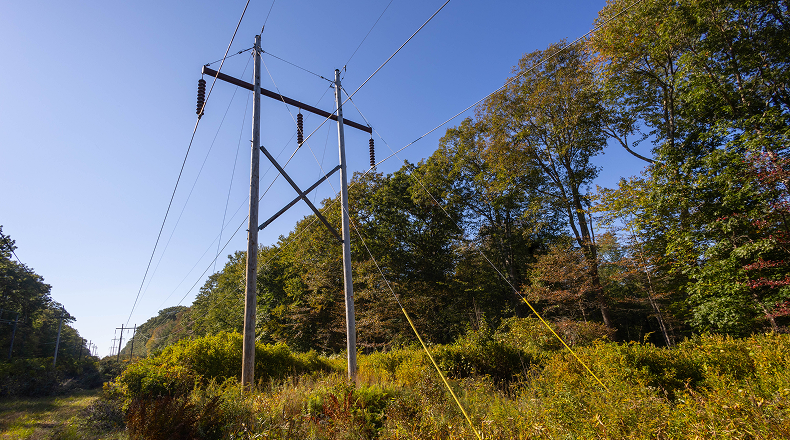
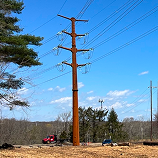
Transmission lines
Transmission lines carry large amounts of electricity over long distances, often through dedicated corridors or rights-of-way, serving many customers at once.
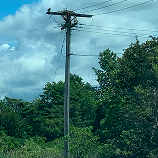
Distribution lines
Distribution lines are the smaller lines you see along streets and in neighborhoods, delivering power directly to homes and businesses.
 Transmission clearance
Managing trees along high voltage lines
Transmission lines carry electricity at very high voltages, so they need wider clearances to operate safely. Vegetation management in these areas focuses on keeping trees and tall growing plants from encroaching into transmission corridors, while allowing compatible, low growing vegetation to remain where possible.
This work helps prevent large‑scale outages and ensures crews can safely access and maintain this critical infrastructure. Distribution clearance
Routine trimming in neighborhoods and along roads
Distribution line clearance involves trimming trees near power lines that run through neighborhoods and along roads. This work is done on a planned cycle to reduce the chance that branches or trees will contact lines during storms or high winds.
Trimming also helps crews reach equipment more quickly when outages happen, which can shorten restoration times. Professional pruning methods are used to support tree health while maintaining safe distances from power lines.